Embark on a journey to uncover the mysteries behind back pain as we delve into the various factors that can leave you wincing in discomfort. From lifestyle habits to traumatic incidents, get ready to explore the intricate web of causes contributing to your back woes.
As we navigate through the labyrinth of back pain triggers, you’ll gain valuable insights into how everyday choices, medical conditions, and even age play a role in this common yet often perplexing issue.
Common Causes of Back Pain
Back pain is a common issue that can be caused by a variety of factors. Understanding the common causes of back pain can help individuals take preventive measures to avoid or alleviate this discomfort.
Lifestyle Factors
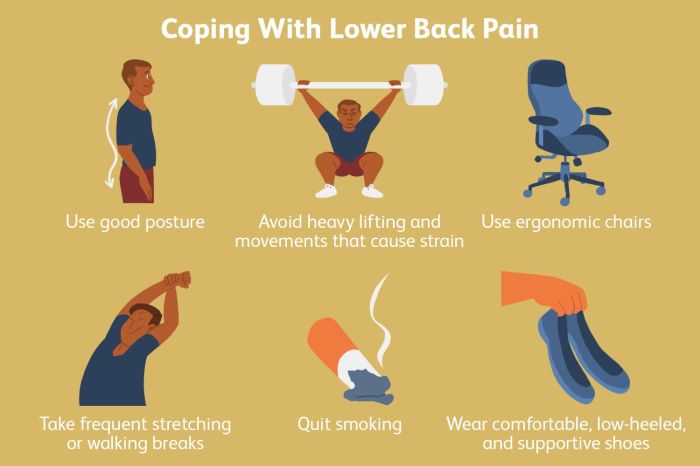
- Poor posture: Maintaining poor posture while sitting, standing, or lifting heavy objects can put strain on the muscles and ligaments in the back, leading to pain.
- Sedentary lifestyle: Lack of physical activity and prolonged periods of sitting can weaken the muscles that support the spine, increasing the risk of back pain.
- Obesity: Excess weight can put added pressure on the spine and contribute to back pain.
Poor Posture
- Slouching: Slouching or hunching over can disrupt the natural alignment of the spine and lead to muscle imbalances and back pain.
- Text neck: Constantly looking down at a phone or electronic device can strain the neck and upper back, causing discomfort in the lower back over time.
- Incorrect lifting techniques: Lifting heavy objects without using proper form can strain the back muscles and result in acute or chronic pain.
Medical Conditions Causing Back Pain
Back pain can be attributed to various medical conditions that affect the spine and surrounding structures. Understanding these conditions is crucial in managing and treating back pain effectively.
Herniated Discs
A herniated disc, also known as a slipped or ruptured disc, occurs when the soft inner core of a spinal disc pushes through a crack in the tougher outer layer. This can irritate nearby nerves, leading to pain, numbness, or weakness in the back, legs, or arms. The most common cause of a herniated disc is aging, as spinal discs become less flexible and more prone to tearing over time.
Additionally, lifting heavy objects improperly, obesity, and genetics can also contribute to the development of herniated discs.
Arthritis
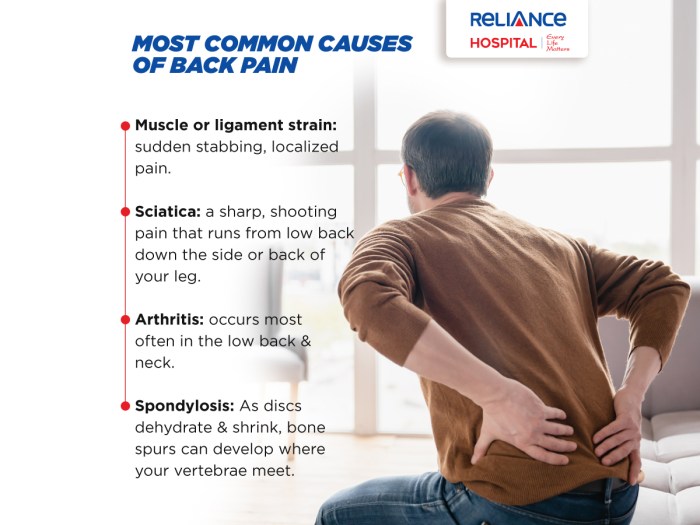
Arthritis is a condition characterized by inflammation of the joints, which can affect the spine and lead to back pain. Osteoarthritis, the most common type of arthritis, occurs when the protective cartilage that cushions the ends of bones wears down over time. This can result in bone rubbing against bone, causing pain, stiffness, and swelling in the back. Rheumatoid arthritis, an autoimmune disorder, can also affect the spine and cause back pain by attacking the lining of the joints, leading to inflammation and pain.
Occupational Factors and Back Pain
Back pain is a common issue that many individuals face, and one major contributing factor can be the type of work they do on a daily basis. Certain occupations can increase the risk of back pain due to the physical demands and repetitive movements involved. It is essential to understand how work-related activities can impact back health and the importance of ergonomics in preventing back pain in the workplace.
Impact of Occupation on Back Pain
Occupational factors play a significant role in the development of back pain. Jobs that involve heavy lifting, prolonged sitting, repetitive motions, or awkward postures can strain the back muscles and lead to pain and discomfort.
- Construction workers, warehouse employees, and healthcare professionals are at higher risk of back pain due to heavy lifting and repetitive movements.
- Office workers who sit for long hours at a desk may experience back pain from poor posture and lack of movement.
- Drivers, especially truck drivers, often suffer from back pain due to long hours of sitting and the vibrations from the vehicle.
Ergonomics in the Workplace
Ergonomics focuses on designing workspaces and equipment to fit the individual’s needs and reduce the risk of musculoskeletal injuries, including back pain.
Proper ergonomics can help maintain neutral body positions, reduce excessive force on the spine, and minimize awkward postures that can lead to back pain.
- Adjusting chair height, monitor position, and keyboard placement can improve posture and reduce strain on the back.
- Using lifting aids, such as dollies or carts, can help reduce the risk of back injuries for workers who need to lift heavy objects.
- Encouraging regular breaks and stretching exercises can prevent stiffness and improve circulation to the back muscles.
Trauma and Back Pain
Accidents or injuries can have a significant impact on the back, leading to both acute and chronic pain. Trauma to the spine and surrounding muscles can result in various types of back pain, affecting individuals of all ages and activity levels.
Sports Injuries and Back Pain
Sports injuries are a common cause of trauma that can result in back pain. High-impact sports or activities that involve sudden movements or heavy lifting can strain the muscles and ligaments in the back, leading to pain and discomfort.
Effects of Trauma on the Spine
Trauma can affect the spine in different ways, such as fractures, herniated discs, or spinal cord injuries. These conditions can cause severe back pain and may require medical intervention to address the underlying issues.
Age-Related Causes of Back Pain
As we age, our spine undergoes natural changes that can contribute to back pain. These changes often result from wear and tear over time, leading to various age-related causes of back pain.
Degenerative Changes in the Spine
- The intervertebral discs between the vertebrae lose water content and become less flexible, causing them to shrink and lose their cushioning effect.
- Bony growths called bone spurs may develop on the vertebrae and facet joints, leading to stiffness and reduced mobility in the spine.
- The facet joints can degenerate, causing inflammation, pain, and decreased range of motion.
Osteoporosis and Back Pain
- Osteoporosis is a condition characterized by weakened and brittle bones, which can make the vertebrae more susceptible to compression fractures.
- Compression fractures in the vertebrae due to osteoporosis can result in sudden and severe back pain, especially in older adults.
- These fractures can lead to loss of height, kyphosis (forward curvature of the spine), and chronic pain in the back.
End of Discussion
In conclusion, the landscape of back pain reveals a complex interplay of factors that can impact individuals in different ways. By understanding these causes, you’re better equipped to address and alleviate the discomfort that may arise, paving the way for a healthier and happier back.
Essential Questionnaire
Why does poor posture lead to back pain?
Poor posture puts strain on the muscles and ligaments in the back, leading to discomfort and potential long-term issues.
Can sports injuries cause long-lasting back pain?
Yes, sports injuries can result in chronic back pain if not properly treated and rehabilitated.
How does aging contribute to back pain?
Aging can lead to degenerative changes in the spine, such as disc deterioration, which can cause back pain over time.
Are there specific occupations that are more prone to back pain?
Jobs that involve heavy lifting, prolonged sitting, or repetitive movements are often associated with a higher risk of back pain.


