With Sciatica and back pain at the forefront, get ready to dive into a world of spine-tingling information that will have you sitting up straight in no time. From unraveling the mysteries of sciatica to decoding the secrets of back pain, this rollercoaster ride will leave you informed and empowered.
Let’s explore the ins and outs of these common ailments, debunk myths, and uncover practical tips to keep your spine happy and healthy.
Sciatica
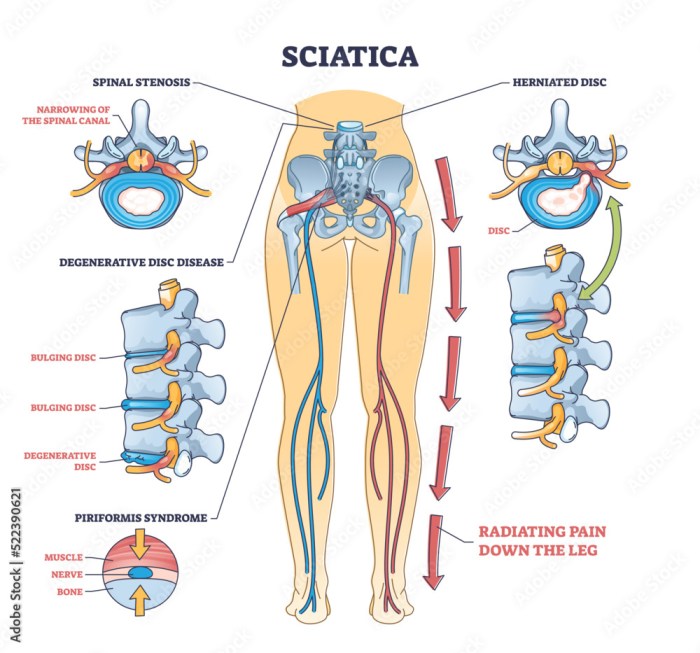
Sciatica is a condition characterized by pain that radiates along the path of the sciatic nerve, which runs from the lower back through the hips and buttocks and down each leg. The pain can vary from mild discomfort to sharp, burning sensations.
Symptoms of Sciatica
- Pain that radiates from the lower back to the buttocks and down the leg
- Numbness or tingling in the leg or foot
- Weakened muscles in the affected leg
- Difficulty moving the affected leg or foot
Causes of Sciatica
- Herniated discs in the spine pressing on the sciatic nerve
- Bone spurs on the spine narrowing the space around the nerve
- Spinal stenosis, a condition where the spinal canal narrows and compresses the nerves
Differences from General Back Pain
- Sciatica is more focused and typically follows the path of the sciatic nerve
- General back pain may be more diffuse and not necessarily radiate down the leg
Treatment Options for Sciatica
- Physical therapy to strengthen muscles and improve flexibility
- Medications such as anti-inflammatories or muscle relaxants
- Epidural steroid injections to reduce inflammation around the affected nerve
- Surgery in severe cases to relieve pressure on the nerve
Back Pain Overview
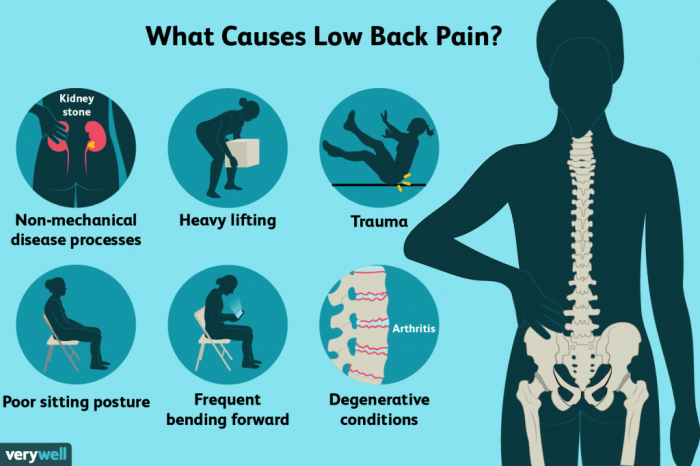
Back pain is a common condition that affects millions of people worldwide. It can range from mild discomfort to severe and debilitating pain, impacting daily activities and quality of life. There are different types of back pain, including acute, chronic, and radicular pain.Acute back pain typically lasts for a few days to a few weeks and is often caused by injury or strain.
Chronic back pain, on the other hand, persists for longer periods, usually lasting for three months or more. Radicular pain, also known as sciatica, occurs when a nerve in the spine is compressed or irritated, causing pain to radiate down the leg.
Common Risk Factors for Back Pain
- Poor posture: Slouching or sitting for long periods can strain the muscles and ligaments in the back.
- Lack of exercise: Weak muscles in the back and core can lead to back pain.
- Obesity: Excess weight puts added stress on the spine and can contribute to back pain.
- Aging: Degenerative changes in the spine can occur as we age, increasing the risk of back pain.
Lifestyle Changes to Alleviate Back Pain
- Exercise regularly: Strengthening the back and core muscles can help support the spine and reduce pain.
- Improve posture: Maintain good posture while sitting and standing to reduce strain on the back.
- Ergonomic adjustments: Use proper ergonomics at work and home to reduce the risk of back pain.
- Weight management: Maintaining a healthy weight can reduce the stress on the spine and decrease back pain.
Sciatica vs. Back Pain
Sciatica and general back pain are two common conditions that can cause discomfort and affect daily activities. It is essential to understand the differences between the two in terms of symptoms, causes, and treatment approaches.When it comes to symptoms, sciatica typically presents with pain that radiates from the lower back down one leg. This pain can be sharp, shooting, or burning and may be accompanied by numbness, tingling, or weakness in the leg.
On the other hand, general back pain is usually localized to the lower, middle, or upper back and may not radiate down the leg. The pain with back pain can vary from dull, achy, to sharp and may be aggravated by certain movements or activities.The causes of sciatica are often related to compression or irritation of the sciatic nerve, which can be due to a herniated disc, spinal stenosis, or bone spurs.
In contrast, general back pain can have various causes, including muscle strains, ligament sprains, poor posture, or underlying conditions like arthritis or scoliosis.When it comes to treatment approaches, both sciatica and back pain can benefit from a combination of conservative measures and lifestyle modifications. For sciatica, treatment may include physical therapy, medications, epidural steroid injections, or in severe cases, surgery.
Back pain treatment may involve similar interventions, along with chiropractic care, acupuncture, or massage therapy.In terms of exercises that can help with both sciatica and back pain, it is crucial to focus on strengthening the core muscles, improving flexibility, and maintaining proper posture. Examples of exercises include:
Core Strengthening Exercises
- Planks
- Bird Dogs
- Bridge Exercises
Flexibility Exercises
- Hamstring Stretches
- Cat-Cow Stretch
- Piriformis Stretch
Posture Correction Exercises
- Shoulder Blade Squeezes
- Thoracic Extension Exercises
- Wall Angels
Prevention and Management
Preventing sciatica and back pain is crucial for maintaining overall health and well-being. By adopting healthy habits and incorporating specific strategies, you can reduce the risk of developing these painful conditions.
Preventive Measures
- Avoid prolonged sitting or standing in one position. Take breaks to stretch and move around periodically.
- Maintain a healthy weight to reduce strain on your spine and muscles.
- Engage in regular exercise to strengthen your core muscles and improve flexibility.
- Practice proper lifting techniques to avoid straining your back.
- Ensure your workspace is ergonomically designed to support good posture.
Role of Physical Therapy
Physical therapy plays a significant role in managing both sciatica and back pain. It involves exercises, stretches, and manual techniques to improve mobility, reduce pain, and prevent further injuries.
Tips for Improving Posture
- Keep your shoulders back and relaxed while sitting or standing.
- Use a chair with good lumbar support to maintain the natural curve of your spine.
- Avoid slouching and make a conscious effort to sit up straight.
- Adjust your computer screen to eye level to prevent neck strain.
- Sleep on a supportive mattress and avoid sleeping on your stomach to alleviate back pain.
Closing Summary
As we reach the end of this journey through Sciatica and back pain, remember to listen to your body, practice good posture, and seek professional guidance if needed. By understanding these conditions, you can take control of your spinal health and live a life free from unnecessary discomfort.
Question & Answer Hub
What are the best exercises for relieving sciatica pain?
Exercises like gentle stretching, yoga, and walking can help alleviate sciatica pain by improving flexibility and strength in the lower back and legs.
Can poor posture contribute to both sciatica and back pain?
Yes, maintaining good posture is crucial in preventing both sciatica and back pain as it reduces unnecessary strain on the spine and surrounding muscles.
Is surgery the only option for treating severe sciatica?
No, surgery is usually considered as a last resort for severe cases of sciatica. Many individuals find relief through non-invasive treatments like physical therapy and medication.
How can I prevent sciatica and back pain while sitting at a desk all day?
Ensuring ergonomic workspace setup, taking breaks to stretch, and maintaining proper posture can help prevent the onset of sciatica and back pain from prolonged sitting.


